The California Moral Character Review Process Explained
The California Moral Character review is a structured, multi-stage evaluation conducted by the State Bar of California to determine whether an applicant meets the standards required for admission to practice law. It is not a single decision point, but a process that unfolds over time and may involve follow-up inquiries, documentation requests, or an Informal Conference before a final determination is issued.
Understanding how the process works can reduce uncertainty and help applicants respond deliberately rather than reactively.
Timeline Expectations
For a deeper breakdown of timing and extensions, visit
Moral Character Timeline and Processing Expectations
What the Moral Character Review Evaluates
The State Bar evaluates more than isolated events. Its published guidance emphasizes:
Candor and completeness in disclosures
Consistency across applications and records
Financial responsibility
Evidence of rehabilitation where applicable
Omissions or inconsistencies can raise concerns separate from the underlying conduct itself. The review considers patterns and context over time, not just individual incidents.
Applicants can review the State Bar’s Moral Character standards directly through the State Bar of California admissions materials.
The Stages of the Moral Character Process
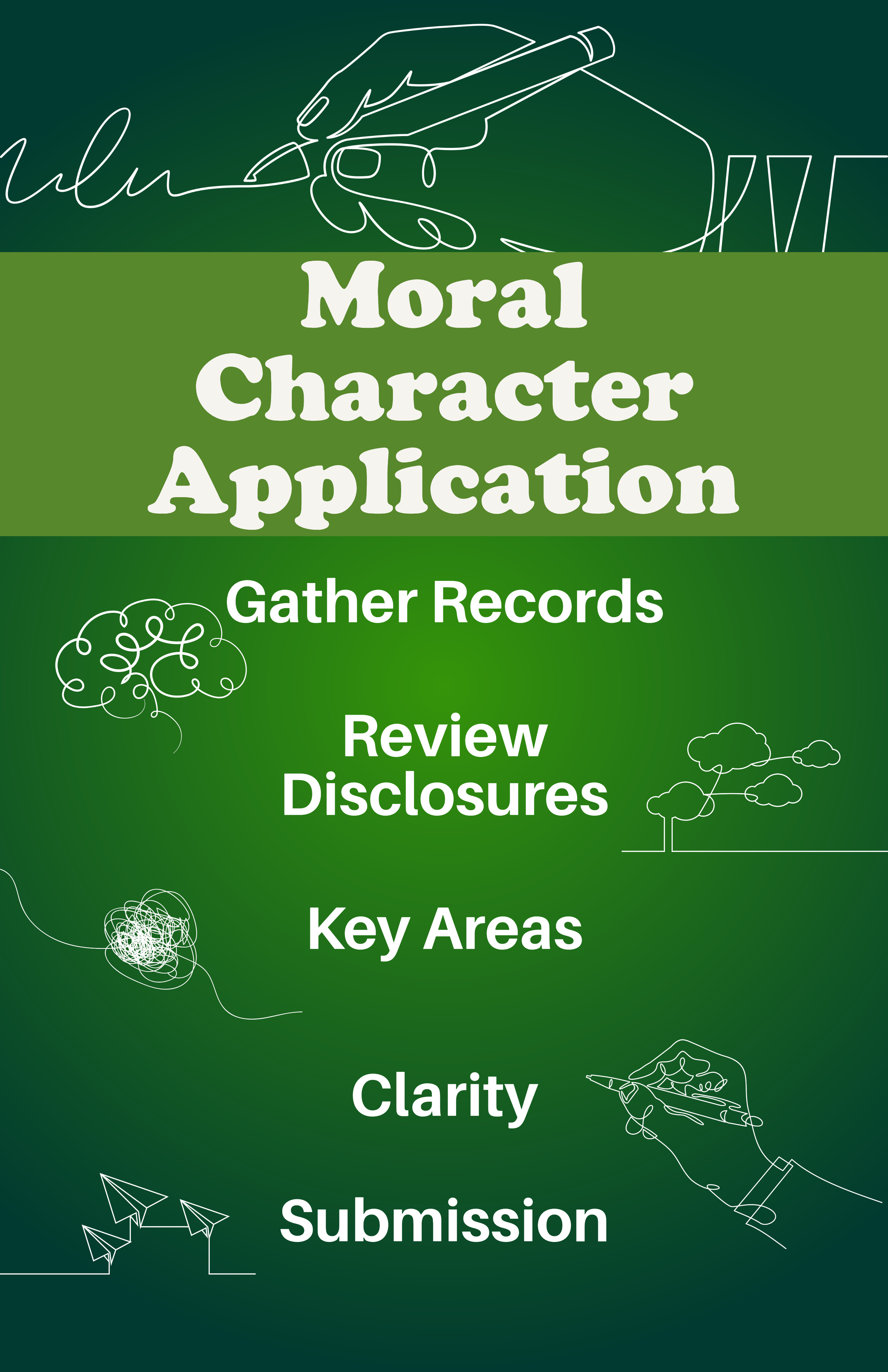
Although every application is different, the process generally moves through the following phases:
1. Application Submission
The applicant submits the Moral Character Application through the State Bar’s admissions portal.
2. Completeness Review
The Office of Admissions conducts an initial review to determine whether the application is complete. The State Bar’s stated goal is to notify applicants within approximately 60 days whether the application is deemed complete or incomplete.
If incomplete, deficiencies must be cured within the stated period or the application may be deemed abandoned.
3. Investigation or Supplemental Requests
If the application is deemed complete but raises questions, the State Bar may request additional documentation or clarification. Applicants typically have up to 90 days to respond to supplemental requests before the file may be considered abandoned.
This phase often extends the overall timeline.
For more detail, see our page on
How Long Does the California Moral Character Review Take?
4. Informal Conference (If Issued)
Before issuing an adverse Moral Character determination, the State Bar must offer the applicant the opportunity to participate in an Informal Conference under Rule 4.46.
The conference allows the applicant to present information and context directly to the Committee. It is not a disciplinary trial, and declining attendance creates no negative inference.
Learn more about the process on our
Moral Character Informal Conference page.
5. Determination
After review of the record, including any conference proceedings, the Committee issues either:
A Positive Moral Character Determination, or
An Adverse Moral Character Determination
Each outcome carries specific procedural implications.
The State Bar advises that applicants should expect the Moral Character review to take a minimum of six to eight months from the date the application is deemed complete. More complex matters may take longer.
Key timing benchmarks include:
Approximately 60 days for completeness notification
Up to 90 days to respond to supplemental requests
Additional time if further investigation or a conference is required
Why Preparation Matters
Many delays arise not from the underlying events disclosed, but from how disclosures are presented and documented. Incomplete explanations, inconsistent dates, or missing supporting materials can prompt additional review.
Careful preparation focuses on:
Clear and complete disclosures
Organized supporting documentation
Consistent narratives across applications
Proactive updates when required
When the review centers on judgment and candor, clarity matters.
FAQs
How long does the California Moral Character review take?The State Bar notes that the review can take a minimum of six to eight months from the date the application is deemed complete, and longer if additional investigation is required.
Can my application be abandoned?Yes. Failure to cure deficiencies or respond to supplemental requests within stated deadlines may result in the application being deemed abandoned.
What happens if something changes after I submit?Applicants have an ongoing duty to update the Office of Admissions if new relevant information arises.
For more detailed answers, explore the pages linked throughout this guide.
A Measured Approach
The Moral Character review process is procedural and structured. Understanding its stages, timelines, and expectations allows applicants to approach each phase deliberately.
If you have questions about your specific circumstances, supplemental requests, or conference invitations, thoughtful guidance early in the process can provide clarity before the review moves forward.